
Delayed Egress Locking Systems
WHY DELAYED EGRESS?
Based on acceptance by the door hardware and security industry starting in 1981, Delayed Egress has become a recognized code compliant exit door solution for a variety of non-emergency security applications – while still providing immediate release with smoke or fire detection or other condition as needed. This white paper provides some history and details about the proper application of Delayed Egress Locking Systems.
Prefer print?
Download White Paper PDF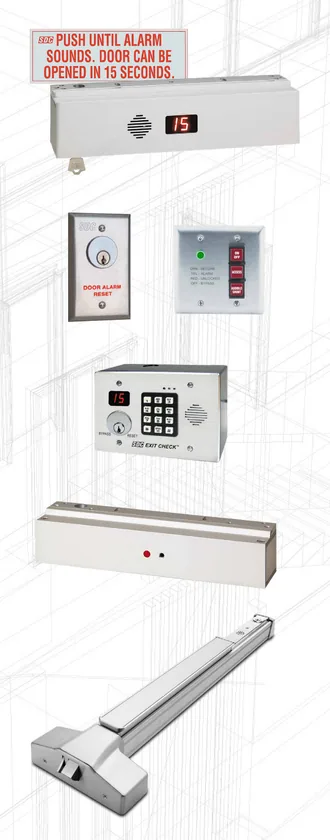
Table of Contents
What are Delayed Egress Locking Systems?
Delayed Egress Systems are door locking solutions designed for use in non-emergency situations to prevent a door from opening immediately when egress is attempted. Fire, Life Safety and Building codes usually require that occupants can freely exit in a single motion to unlatch the door without special knowledge, effort, or the use of a key or tool. Delayed Egress systems are an exception to the rule.
Typically used on exit doors, when unauthorized egress is initiated in the locked mode, Delayed Egress locks delay egress through the door for 15 or 30 seconds. Meanwhile, the person exiting must wait while personnel or security respond. The door unlocks after 15 seconds have elapsed, permitting egress. A signal from the fire life safety system will release the lock for uninhibited egress in an emergency.
Delayed Egress systems are used to control pedestrian traffic in government, public and transportation facilities, including airport jetways and tarmacs. They provide theft protection of merchandise, technology and other valuables such as art and museum artifacts in stores, warehouses, art galleries, museums and technology facilities. Delayed Egress locks also restrict movement of wandering patients in senior assisted living, psychiatric, and drug rehab facilities and guard against infant abduction in hospital nurseries.
How Did We Get Here?
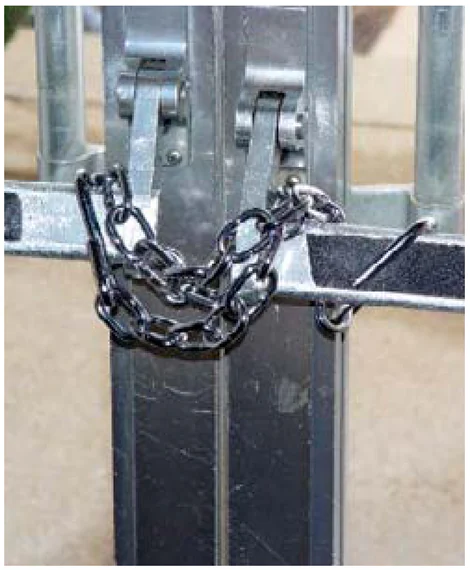
Life safety and security needs often create conflicts and emergency exit doors are a prime example. Prior to 1981, emergency exit doors could only be locked by means of a latching exit device. Frequently, alarm devices were paired with the door to sound when egress was attempted. Although immediate egress was always possible, little security was provided. Because of this it was not uncommon to find exit devices chained and/or padlocked illegally during certain times of the day.
In 1981, the NFPA 101 – Life Safety Code was changed to allow for a 15 second delayed release of a failsafe locking device on openings of this type to provide more security without compromising life safety.
The locking device is to be connected to an alarm system to allow for immediate release during a fire or other emergency.
In all cases, proper application of a Delayed Egress System must comply with national and regional building and fire life safety codes and the NFPA 101 section on "Special Locking Arrangements." For details and restrictions that apply when using Delayed Egress locks, visit NFPA 101 at: http://bit.ly/3LYUXwP and also consult with your local AHJ (Authority Having Jurisdiction) for their specific code requirements regarding the application of Delayed Egress Locking Systems.
What Happened Next?
SDC responded to the change in code by pioneering the delayed egress locking category, patenting the first exit door security system with a 15 second delayed door release in 1985.
Based on acceptance by the door hardware and security industry, Delayed Egress Systems became a recognized code compliance solution to a variety of non-emergency applications while still providing immediate release with smoke or fire detection or other lockdown condition as needed.
Then, in 1995, we patented and launched ExitCheck® – the world's first delayed egress lock to integrate a visual digital display, verbal countdown and alarm tone, alternating verbal message and door release indicator.
Since then, SDC has continued to develop the broadest line of delayed egress locking solutions with a proven record of safety, security and reliability. Other manufacturers have also confirmed the veracity of using Delayed Egress Systems in Fire and Life Safety circumstances while meeting code compliance and security requirements.
Addressing Misconceptions
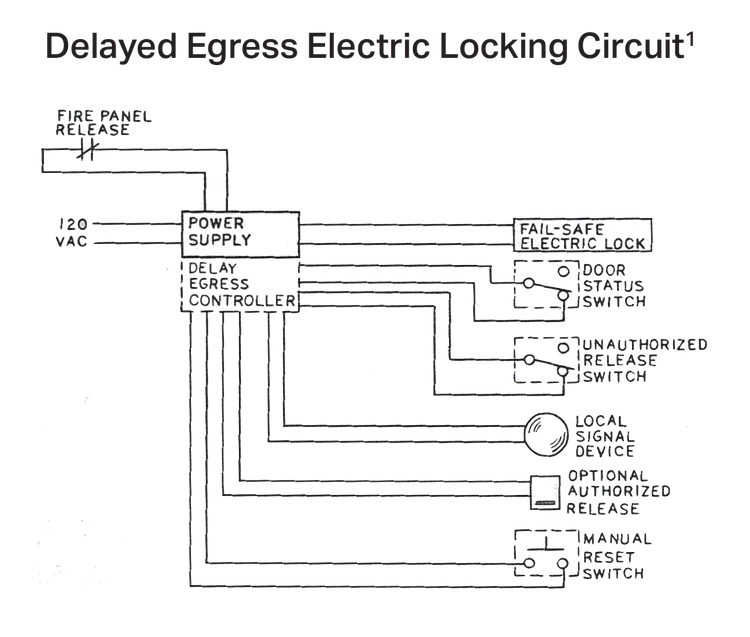
One of the more common misconceptions we've encountered about Delayed Egress Systems is that exit from a building is delayed during an emergency – think smoke or fire detection - endangering lives. As the basic electric locking circuit wiring diagram shows1, delayed egress is first and foremost a fail-safe electric locking system.
This means that if power to the system is ever lost for whatever reason, the fail-safe electric lock will release immediately, allowing for egress without delay in an emergency. The diagram also shows the system as being connected to the fire panel release of an alarm system, again providing for uninhibited egress in an emergency. Further, if a fire actually occurs in the alarm, power supply or controller systems causing failure, the fail-safe lock will also release.
Addressing Misapplications
As far as an active shooter is concerned, Delayed Egress Systems were not designed for application in these situations. Rather, there are numerous Lockdown solutions developed to keep occupants safe from outside intruders while still providing for their egress and also outside access by administration/management and first responders.
See our Classroom Lockdown page for examples of code compliant, flexible access & lockdown controls devised to provide security in active shooter situations: sdcsecurity.com/classroom-lockdown.
Should an owner or facility manager have concerns about an active shooter situation within a building secured with a Delayed Egress System on a perimeter door, an optional legal release may be included for immediate release of the lock by authorized personnel using the "OPTIONAL AUTHORIZED RELEASE" input as noted in the previous wiring diagram.
Misapplication of a Delayed Egress System can occur – like overriding the release function with a motion sensor or switching off the release function with an after-hours switch - in ways too numerous to detail.
Common Applications
Remember the Objective
Delayed Egress Systems let facility management secure perimeter doors during normal business hours to prevent theft – like warehouse back doors, and to ensure public safety, like jetway & tarmac doors at airports – while still allowing for egress in the event of an emergency. They provide theft protection of merchandise, technology and other valuables such as art and museum artifacts in stores, art galleries, museums and technology facilities. Delayed Egress locks also restrict movement of wandering patients in senior assisted living, psychiatric, and drug rehab facilities and guard against infant abduction in hospital nurseries.
Delayed Egress Systems like ours (and others) reduce an occupant's stress by communicating the door status verbally and visually in an emergency while maintaining safety and security needs.
Pedestrian Traffic Control & Theft Protection
As said previously, Delayed Egress systems are used to control pedestrian traffic in government, public and transportation facilities, including airport jetways and tarmacs. The purpose is usually to "prevent unauthorized access/egress and to control and limit traffic effectively in designated areas."1 Chances are, you've probably heard a door alarm, siren or audible alert message at an airport when someone tried to enter or exit a terminal door enabled with a Delayed Egress lock.
Theft protection of property, merchandise and other valuables is becoming increasingly problematic. The U.S. Chamber of Commerce reports that there is a surge in theft and violent crime due not to one-time shoplifters but to the rise in highly organized retail crime rings. In 2022, retailer losses, or shrink amounted to nearly $100 billion dollars.2
A great Delayed Egress application example can be found in a Delayed Egress Traffic Control Solution flyer featuring our 1581S Series Mini Integrated Delayed Egress Locks.
A Delayed Egress High Traffic Control solution featuring our 1511S Series Integrated Delayed Egress Locks can be found on page 28 of our Access Control Security Solutions brochure.

Wandering Patients & Infant Protection
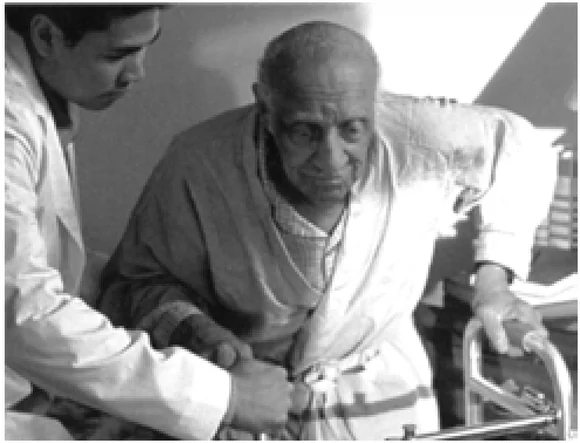
Delayed Egress locks also restrict movement of wandering patients in senior assisted living, psychiatric, and drug rehab facilities. Having a controlled environment to serve the special needs of Dementia-Alzheimer patients is critical to their care. Delayed Egress Systems allow freedom of movement while protecting wandering patients from dangerous elopement situations.
They are also used to guard against infant abduction in hospital nurseries. And, they can be compatible with popular patient tracking systems like those used in nurseries to deter kidnapping of infants.
Check out our LTC Facilities page at sdcsecurity.com/ltcfacilities for more Delayed Egress locking applications.
Proper Application Must Comply With Codes
A Delayed Egress System must comply with all national and regional building and fire life safety codes and the NFPA 101 section on Special Locking Arrangements. Some common requirements are:
- The delayed egress lock must be approved or listed and shall be permitted for installation on doors serving occupancy levels as specified per prevailing code (consult your AHJ for complete details).
- The doors must unlock upon activation of an automatic sprinkler system or automatic fire detection system.
- The doors must unlock upon loss of power controlling the delayed egress locking device.
- The delayed egress locks shall be unlocked by a signal from the fire command center.
- Applying no more than 15 lbs of pressure will start an irreversible process to unlock the door. Nuisance delay varies per code.
- An alarm must sound at the opening upon initiation of the release process.
- A sign must be applied to the door.
Check With Your Local AHJ
As always, we strongly recommend checking with the local AHJ regarding code compliance before considering or installing any type of Delayed Egress System to ensure the proper application will meet your specific requirements.
For more Delayed Egress product information and resources, visit sdcsecurity.com/delayed-egress-innovation. For a comprehensive list of Code Compliant Operation Modes that apply to our Delayed Egress Systems refer to the Code Compliance section of this White Paper.
SDC Delayed Egress Systems & Application Attributes
Integrated Delayed Egress Locks
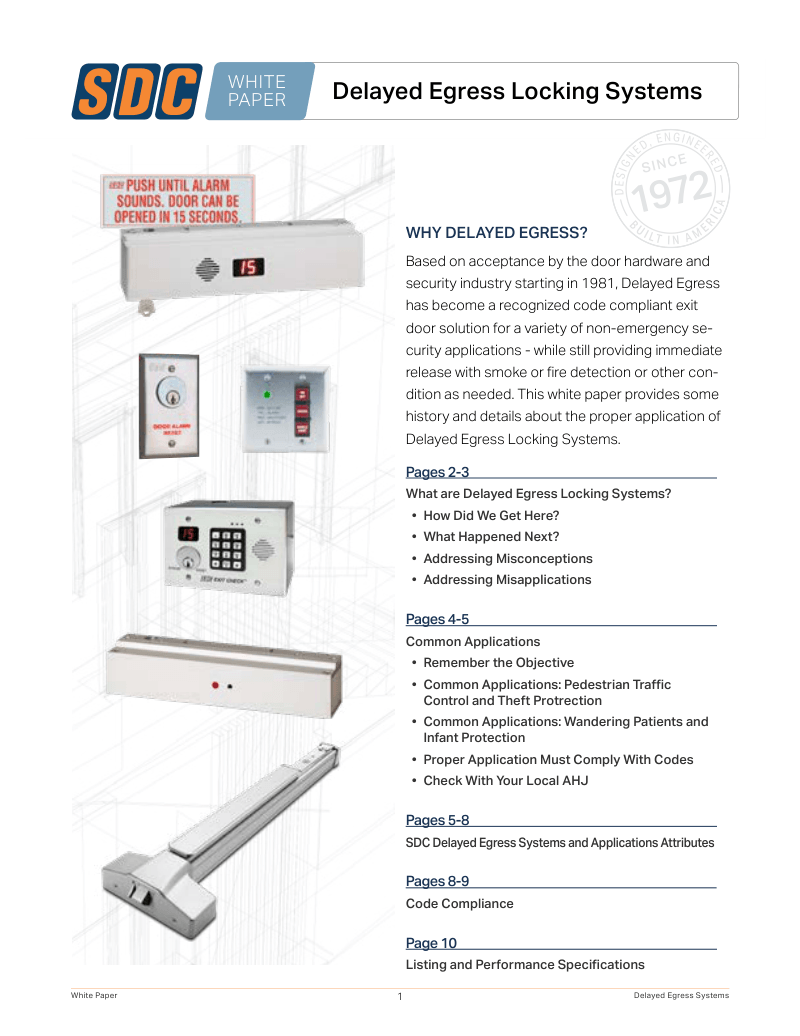
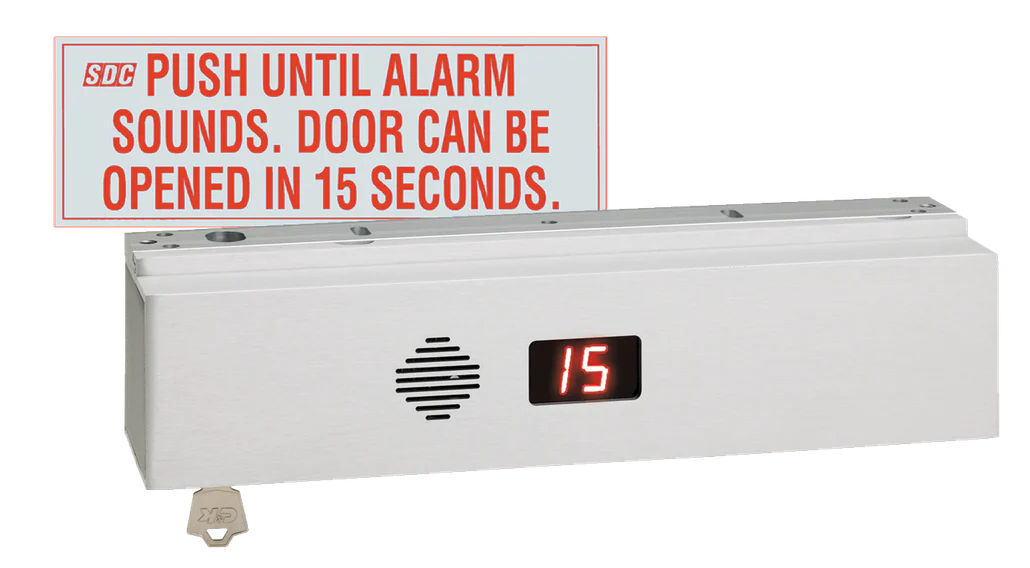
ExitCheck® 1511S and 1511T Series Integrated Delayed Egress Locks for single and double doors and 1581S Series Mini Integrated Delayed Egress Locks consist of an electromagnetic lock with built-in delayed egress logic. The ExitCheck® line of Delayed Egress locks were the world's first to integrate a visual digital display, verbal countdown and alarm tone with an alternating verbal message and door release indicator.
The 1581S is a small, less obtrusive, less expensive alternative that delays egress through perimeter doors and alerts security personnel with a less disruptive, subdued alarm. All SDC Integrated Delayed Egress Locks are compatible with Access Controls and Wandering Patient, Infant Abduction and Patient Tracking Systems.
| SDC Integrated Models | |
|---|---|
| 1511S and 1511T Integrated Delayed Egress | 1,650 lbs Holding Force |
| 1581S Mini Delayed Egress | 650 lbs Holding Force |
Application Attributes:
- Latching door application: Activated by door movement when used with existing standard mechanical exit device or lockset. No power transfer device required.
- Non-latching door application: May be used on non-latching glass doors equipped with an exit sensor bar. Applying pressure to sense bar activates device. Power transfer device required.
- Reset and bypass controls may be built into the lock or wall mounted (see product specifications).
- Typically the most economical installation with the least components and minimum wiring.
- Applicable to new or retrofit installations.
Component Delayed Egress System
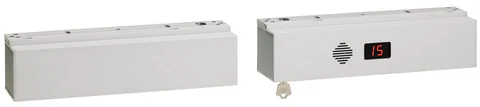
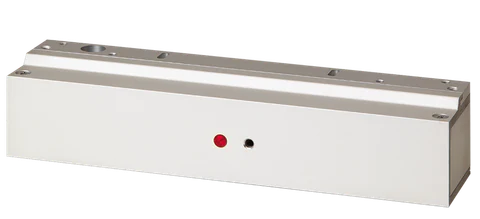
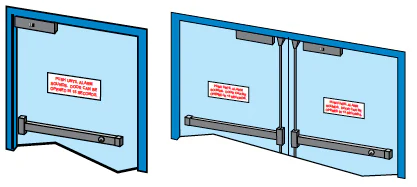
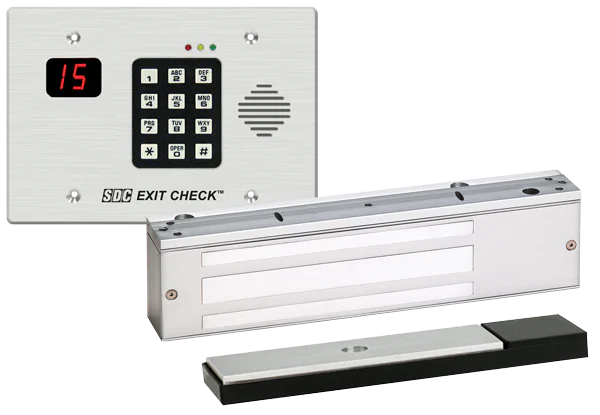
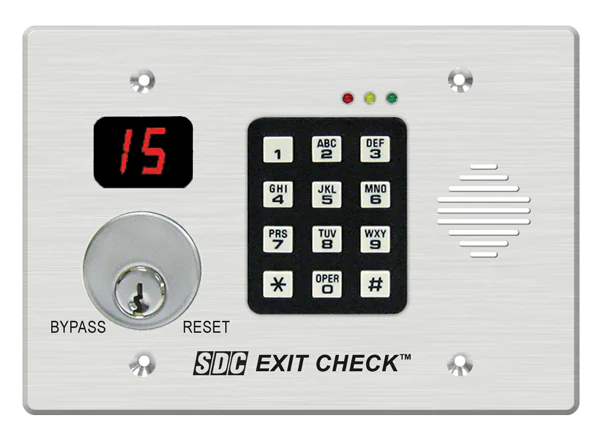
ExitCheck® 101-DE Series Delayed Egress Controllers are a two piece system typically consisting of a slave magnetic lock or exit device controlled by a separate 2 or 3 gang wall mount box with integrated delayed egress logic mounted adjacent to the door. Other component systems may house delayed egress logic in the power supply or separate remote enclosure. All SDC Component Delayed Egress Systems are compatible with Access Controls and Wandering Patient, Infant Abduction and Patient Tracking Systems.
| SDC Delayed Egress Controllers | |
|---|---|
| 101-DE | Delayed Egress Controller |
| 101-KDE | Delayed Egress Controller with Reset & Bypass Keyswitch |
| SDC Slave Magnetic Locks & Exit Devices | |
|---|---|
| 1511DE Series Slave EMLocks | 1,650 lbs Holding Force |
| 1571DE Series Slave EMLocks | 1,200 lbs Holding Force |
| 1581DE Series Slave EMLocks | 650 lbs Holding Force |
| 1575/76DE Series Slave Gate Locks | 650 lbs Holding Force |
| S6000-DES Series Slave Exit Devices | Rim & Vertical Rod |
| S6300-DES Series Slave Exit Devices | Mortise |
Application Attributes:
- Latching door application: Activated by door movement when used with existing standard mechanical exit device or lockset. No power transfer device required.
- Non-latching door application: May be used on non-latching glass doors equipped with an exit sensor bar. Applying pressure to sense bar activates device. Power transfer device required.
- Reset and bypass controls are conveniently located adjacent to the door in a surface or flush mount enclosure.
- Smaller lock housings provide for better aesthetics.
- Weatherized lock available for outdoor applications.
- Applicable to new or retrofit installations.
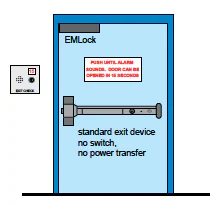
Integrated Delayed Egress Exit Devices
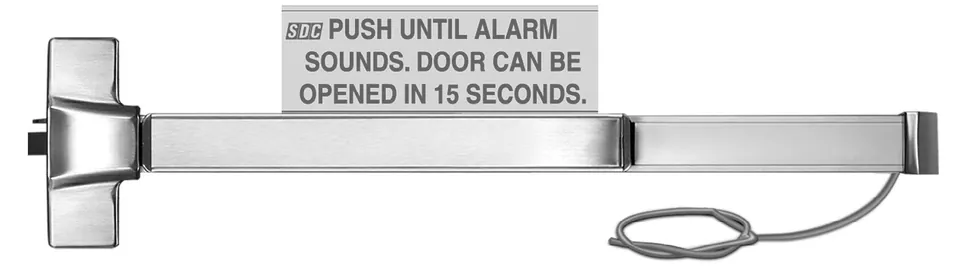
S6000-101 Series and S6300-101 Series All-In-One Delayed Egress Exit Devices are equipped with a motor that is controlled by delayed egress logic housed in a Rim, Vertical Rod or Mortise exit device. All SDC Integrated Delayed Egress Exit Devices are compatible with Access Controls and Wandering Patient, Infant Abduction and Patient Tracking Systems.
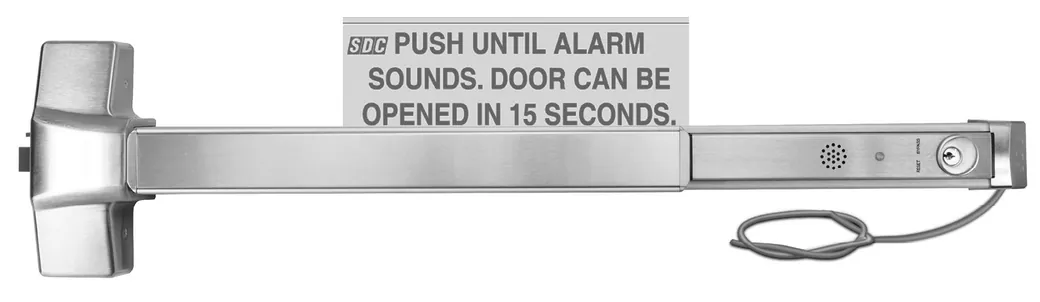
S6100-101 – Rim
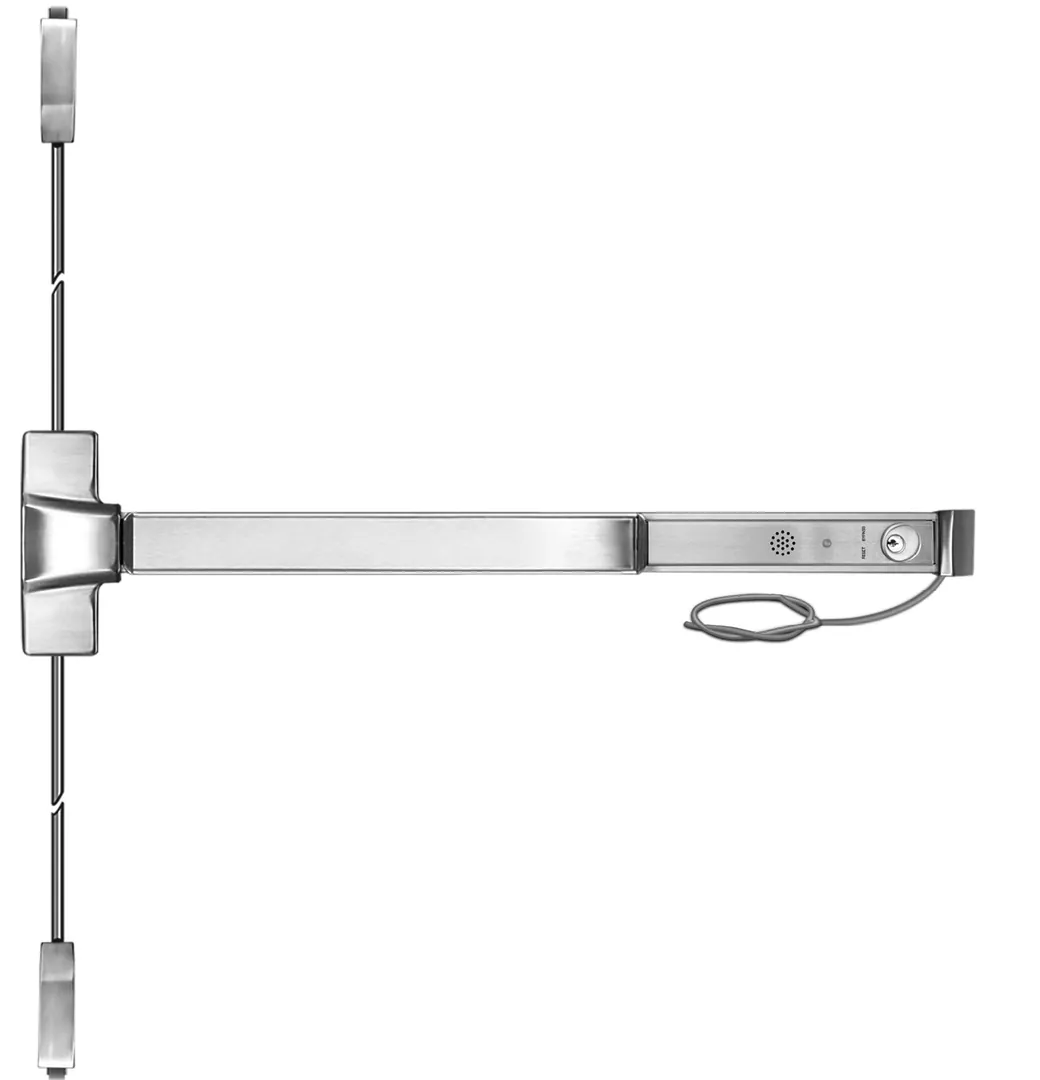
S6200-101 – Surface Vertical Rod
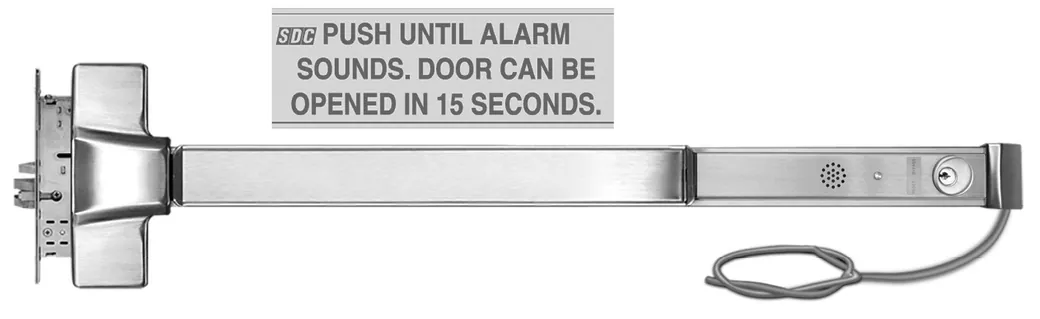
S6300-101 – Mortise
| S6000-101 & S6300-101 Series All-In-One | |
|---|---|
| S61 | Rim |
| S62 | Surface Vertical Rod |
| S63 | Mortise |
Application Attributes:
- Latching door application: Activated by depressing exit device push pad.
- Delayed egress electronics located in the exit bar.
- UL Listed power transfer device required for fire rated doors.
- Reset and bypass controls are conveniently located in the exit devices.
Code Compliance
Delayed Egress Code Compliance Authorities & Standards
BOCA: This compliance is for special locking arrangements.
CBC: This compliance is for special egress control devices.
Chicago: This compliance is for electro-magnetic locking devices.
IBC: This compliance is for delayed egress locks.
IFC: This compliance is for delayed egress locks.
NFPA 101: This compliance is a life safety code for special locking arrangements.
NFPA1-UFC: This compliance is a Uniform Fire Code.
SBC: This compliance is a standard building code.
UBC: This compliance is for 7-2 fire tests of door assemblies.
| Code Compliance | SDC Operation Mode Features | SDC Part # Code |
|---|---|---|
| NFPA, UBC, IBC, IFC, SBC | Delay 15 or 30 sec, Nuisance 1 or 2 sec, Manual Reset, Power Up Locked or Unlocked | NA |
| NFPA, UBC, IBC, IFC, SBC | Fixed 15 sec, Nuisance 0 or 1 sec, Manual Reset, Power Up Locked or Unlocked | ND |
| NFPA, UBC, IBC, IFC, SBC | Fixed 30 sec, Nuisance 0 or 1 sec, Manual Reset, Power Up Locked or Unlocked | NH |
| NFPA, UBC, IBC, IFC, SBC, CBC | Fixed 15 sec, Nuisance 0 or 1 sec, Manual Reset, Power Up Unlocked | NC |
| BOCA | Fixed 15 sec, Nuisance 0 or 1 sec, Auto/Manual Reset, Power Up Locked or Unlocked | BD |
| BOCA | Fixed 30 sec, Nuisance 0 or 1 sec, Auto/Manual Reset, Power Up Locked or Unlocked | BH |
| BOCA, Chicago | Fixed 15 sec, Nuisance 0 sec, Auto/Manual Reset, Power Up Locked or Unlocked | BC |
Door Opening Code Compliance
6'8" Compliance
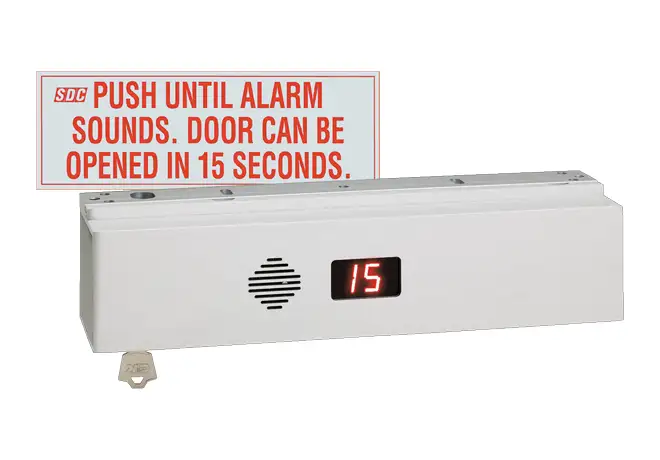
1511S
- Retrofit ease
- 1,650 lbs holding force
- Vertical instruction, tone & visual countdown
- Wandering management system compatible (HUGS)
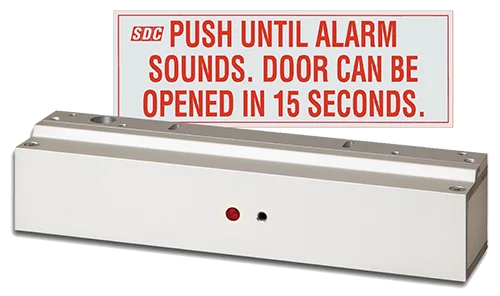
1581S
- Retrofit ease
- Suitable holding force for LTC facility
- Budget friendly
No 6'8" Concerns
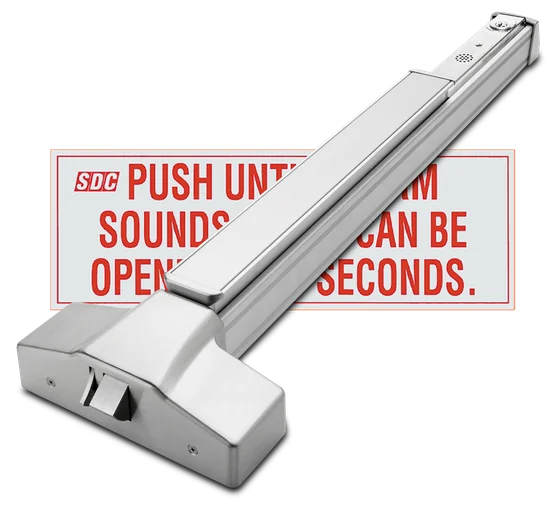
S6000-101
- Occupancy A compliant
- 15 second exit delay, 1 or 2 second nuisance delay
- Single or pair of doors
- Built-in visual and audible annunciation
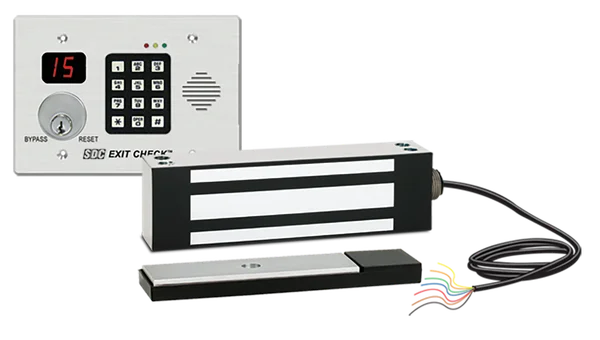
101-KDE with 1576DEU
- Exterior gates
- Uniform controller for all openings with reset, bypass & authorized egress
Listing and Performance Specifications
ABOUT ANSI AND BHMA
When choosing a quality delayed egress device, look for the proper listing and performance specifications. The American National Standards Institute (ANSI) has adopted design and performance standards established by the Builders Hardware Manufacturers Association (BHMA). All delayed egress devices should meet the following applicable standards.
ANSI/BHMA Standard A156.4 for Delayed Egress Locking Systems
This standard provides minimum criteria for all delayed egress electronic logic, initiation and reset process. In addition, refer to ANSI/BHMA A156.23 for minimum magnetic lock requirements and ANSI/BHMA A156.5 for minimum exit device requirements.
ANSI/BHMA Standard A156.23 for Magnetic Locks
This standard details minimum mechanical, electrical and holding force requirements for magnetic delayed egress locks. These rigorous standards also place electromagnetic door locks in three categories based on cycle performance capability. All SDC Exit Check Delayed Egress Locks are ANSI/BHMA A156.23 Grade 1 Compliant.
- ANSI/BHMA Grade 1 – 1,000,000 Cycles (SDC)
- ANSI/BHMA Grade 2 – 500,000 Cycles
- ANSI/BHMA Grade 3 – 250,000 Cycles
ANSI/BHMA Standard A156.5 for Exit Device
This standard provides minimum load and cycle capabilities of mechanical exit devices. All SDC exit devices meet ANSI/BHMA Grade 1 requirements for installation on up to 3 hr fire rated doors.
REQUIRED UL LISTINGS

The UL Listing confirms that the design is electrically safe and has been tested for the purpose the product was intended. All delayed egress devices should meet the following applicable UL test requirements.
- UL Listed - FWAX Special Locking Arrangements: Indicates that delayed egress magnetic lock or exit device has been tested for minimum UL requirements for delayed egress devices.
- UL Listed - GWXT Auxiliary Lock: Indicates the magnetic lock portion of the delayed egress device has been tested for electrical safety and the purpose for which it was intended.
- UL10C Positive Pressure Compliant
- UBC Classified in accordance with Uniform Building Code standard 7-2 "Fire Test for Door Assemblies"
- UL Listed - Fire Exit Hardware: Indicates that the exit device has been tested for minimum UL requirements of fire exit hardware for use on fire rated doors.
Canadian Listing: The C preceding the listing symbol indicates that the product is also UL Listed for use in Canada.
BHMA Certification
The BHMA Certification indicates that the delayed egress lock complies with all ANSI and BHMA performance criteria, and that it has passed an independent static pull test, and a dynamic impact test for holding force. To maintain BHMA Certification, locks are periodically re-tested and evaluated by Intertek Laboratories to ensure they continue to meet ANSI/BHMA A156.23 and A156.5 standards. This is the only certification in the industry that verifies that the magnetic door lock design and holding force continues to meet ANSI/BHMA standards.
The World of Difference Between UL 'Listed' and UL 'Recognized'
UL's Component Recognition Service covers the testing and evaluation of individual components that are incomplete or restricted in performance capabilities. These components will later be used in complete end-products or systems listed by UL. These UL recognized components are not intended for separate installation in the field, they are intended for use as components of complete equipment submitted for investigation and subsequent UL Listing.

State Listings
California State Fire Marshal Listed
This listing is required for California installations. The State of California is well known for consistently setting the highest standards for fire life safety in the world.
1 From "Electronic Locking Systems" by John L. Schum: Considered to be the Industry Bible for Electronic-Electric Locks - amazon.com/Electronic-Locking-Devices-Security-Technicians/dp/0409901253
2 U.S. Chamber of Commerce Retail Crime Data Center - uschamber.com/economy/retail-crime-data-center


